Categories
Uncategorized

Get A Free Vacation & Help Stop Global Warming

I just got word of this amazing deal 8 Billion Trees is running.  They’ve partnered up with hotels around the world to give away vacant rooms for free to any new members that sign up this year.

These are some of the locations you can get a free hotel stay for 3-7 nights:

Cancun, Puerto Penasco, Mazatlan, Nuevo Vallarta, Orlando, Las Vegas, Branson, Williamsburg, Gatlinburg, Acapulco, Koh Samui, Phuket, Myrtle Beach, Daytona Beach and Bali.

You still have to pay the local tax on the rooms but these rooms often go for $200+ a night and the taxes are only about $20.  There is NO weird timeshare presentation or anything like that.  These hotels just want to make otherwise empty rooms available to those joining a good cause.

Here are some comments I found about the vacations and 8 Billion Trees:

8 Billion Trees is a membership club that costs only $20/month to join. The main benefit of the 8 Billion Trees is that for each member they plant 10 trees every month!  There are a ton of other small benefits but this is the big one.

What if I cancel right after signing up, do I still get the free vacation?

Yes! – Even if you cancel right after signing up 8 Billion Trees will still be happy to give you the vacation voucher.  You can even get a full refund on the membership if you ask (but please don’t take advantage of them, they need the money to plant trees).

Right after signing up you will be directed to select your location and get the free resort voucher emailed to you.

8 Billion Trees managed to secure this partnership last year and is offering it to all current members as well as all new members that sign up in 2019.

If you care about trees or the environment please consider signing up for 8 Billion Trees.  This is an amazing offer they’ve managed to put together and you don’t want to miss out!

Join 8 Billion Trees – Click Here

Categories
Uncategorized

8 Billion Trees Review: A New Company with a Bold Mission

The world is faced with several environmental crises. Ocean acidification, widespread pollution, and climate change name just a few.

One extremely timely crisis, however, is that of deforestation. Each year, 18.7 million acres of forest cover are lost as irresponsible logging and agriculture demolish Earth’s pristine environment.

Two entrepreneurs set out to do something about it, and together they formed 8 Billion Trees. Mike and Jon formed a social enterprise to inspire other companies to follow suit.

As a social enterprise, they emphasize on social goals (a.k.a. planting trees to help save the environment) over profit. In other words, making a difference in the world is more important than short-term cash.

Unlike non-profits which often have extremely limited marketing budgets (and are therefore unable to spread awareness effectively), 8 Billion Trees is able to take company revenue and invest it right back into growing the company so that the ultimate goal is achieved: planting as many trees as humanly possible.

And all along the way, 8 Billion Trees helps to spread awareness and support for their partners which include many different charities and NGOs. On top of encouraging direct donations to these groups, 8 Billion Trees donates thousands each month in company contributions.

8 Billion Trees Review: The Good and the Meh

It’s clear that 8 Billion Tree’s mission to change the world by planting 8 billion trees is noble…and definitely audacious.

But what information is there on the company, and what kind of reviews are they getting?

First off, 8 Billion Trees is not a charity, which means contributions are not tax-deductible. Instead, it is a social enterprise with a strong focus on awareness campaigns which means their administrative costs are too high to be a charity. When we asked them about their decision to do this, they gave us a candid response:

“We deliberated for weeks on whether to form as a charity or a social enterprise that runs on profit. Ultimately, we decided that furthering our mission was the most important thing to us.

While we could make a positive impact with a charity, we would be unable to grow rapidly and it would take at least a decade or more to reach our goal of planting 8 billion trees. And frankly, there just isn’t that kind of time to spare.

Earth’s forests are being devastated and no one is stepping in to make a powerful difference that can actually reverse the damage being done so that global forest cover begins to grow each year in destroyed areas.”

On the positive side, 8 Billion Trees is partnered with many charities and non-governmental organizations. This gives them much-needed credentials that trees are actually being planted each month. You just can’t write it off on your taxes.

Another positive is their use of recycled materials for their product line. Using post-consumer and environmentally-conscious materials, they have crafted a line of accessories and apparel that customers can rest easy purchasing.

On the negative side, their collection is limited in size and would greatly be helped by the addition of more options.

Their commitment to livable wages for their employees, consistent monthly donations to many charities, and exceptional customer service are some of the things they do best.

As a new company they have a long way to go and can improve in many ways. But overall, they are making an impact with integrity and helping to change our Earth for a better tomorrow.

Categories
Uncategorized

Earth Needs More Trees and This Company Wants To Plant Them

Trees give Earth life. They scrub pollution out of the air that we breath while making fresh Oxygen from CO2. Trees provide shelter, food and many important products to humans.

Trees remove over 2,000 tons of CO2 from the air every second!

But do humans return the favor to trees?

In the last 100 years, Earth has lost over 25% of its forests.

Counties like the United States and Sweden have managed to increase forests. But most countries have not.

In Africa and South America significant deforestation happens with no replanting. This negatively impacts all of Earth and decimates local species of animals.

If we want to stop climate change something needs to be done about this deforestation. Someone has to start replanting those trees.

A company called 8 Billion Trees was started just this year by a multi-millionaire internet entrepreneur Mike Todd. Their goal is simple, to plant billions of trees.

According to Mike, he was sick of selling “junk” to make shareholders rich. Instead, he wanted to use his money and skills to create a company that does good for the Earth.

8 Billion Trees sells bracelets and memberships to help plant trees around the world.

10 trees for every subscriber, every month!

These trees are planted either directly by 8 Billion Trees or by groups they partner with around the world.

The trees go where they are needed most. In deforested areas with many species that desperately need the trees back to survive. Local farmers are paid to help grow and maintain the trees.

Only natural local species are planted to avoid upsetting the environment.

Now planting trees is a great goal. But how can one company hope to plant 8 billion trees?

I asked Mike and this is what he had to say.

“8 billion trees might seem like a huge number but that is the number of people we have in this world.”

“With the internet, it is more possible than ever to get huge amounts of people around to work together. That’s what we hope to do with 8 Billion Trees.”

8 Billion Trees had its first project this month where they helped plant 10,000 trees in Tanzania, all funded by Mike personally to start.

Will they really be able to plant 8 Billion Trees?

I’m not sure, it seems like a pretty high number.

But I’m certainly rooting for them and have subscribed to help plant 10 trees every month.

You can subscribe as well with the link below.

Subscribe Now – Click Here
Categories
Uncategorized

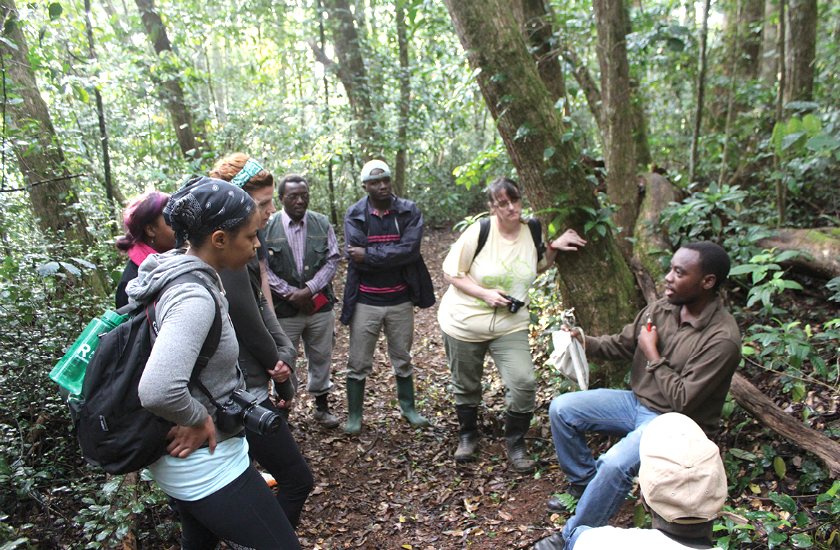
Conservationism: When the Science Says “Good Enough” is More than Okay

The best detectives and problem-solvers in history, from Holmes to Wallander, rely on their skills and analytical abilities just as much as they rely on their gut and personal intuition. But it’s that latter aspect that separates them from others and helps them to connect dots that would otherwise seem unrelated to the ungifted eye.

Conservationism in today’s fast-paced world isn’t much different. Officers and scientists are required to make snap judgments in the field where data and concrete information is often lacking. This isn’t because of laziness. Quite the contrary: conservationists are forced to make decisions fast to keep up with the accelerating negative impact humans are having on the Earth and its diverse ecosystems.

Because of this tendency of researchers to make quick decisions given the rapidly-deteriorating environment in many areas, there is now a push to establish more formal standards for what constitutes adequate data—that can then be acted upon.

But some groups contend that requiring Conservationists to go through more rigorous testing will result in less wildlife and less wild where their fast-serving intuition could have helped to save the day where time is of the essence.

These groups argue that evidence—and much of how people think of the term—is never truly “complete” in our ever-changing world, and that hoping for evidence to reach factually-satisfactory levels would simply make it so that nothing is ever done or accomplished. For this reason, they point out that the use of empirical information is undoubtedly important, but its specific use must be altered to account for the speed of day-to-day operations that necessitate action now, not tomorrow.

For this reason, it is critical that Conservationists be experienced and adept in their training, with solid foundations in not only ecology but human behavior as well. In doing so, those working in the field will be able to draw from a breadth of knowledge when making life or death decisions in the realm of Earth’s diverse ecosystems.

Field staff will be the first to agree that formal evidence and concrete data are the foundation of any conservation decision. However, they also argue that the field of Conservationism itself demands that decisions be made quickly—time is not in abundant supply when countless species are facing Extinction and countless habitats are facing irreversible destruction. And to accommodate these time-bound decisions, the use of hands-on experience and intuition becomes mandatory.

For this reason, they argue that acting on data considered “good enough” will result in the quickest, most effective response–and that’s more than okay.

Categories
Uncategorized

Last Remaining Rhino to Survive Project Attacked by Lions

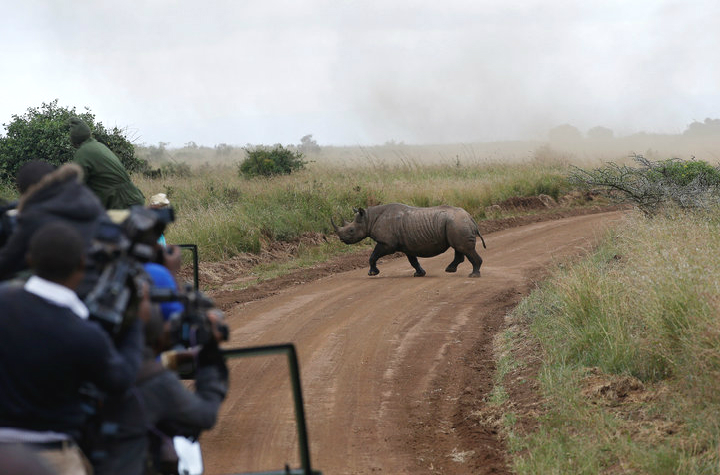
The last-surviving rhino of a Kenyan relocation effort was now been attacked by Lions. The rhino was involved in a project by the wildlife park that aimed to move rhinos to a new area in Tsavo East National Park.

Out of the 11 total black rhinos relocated, 10 have already died. Tourism minister Najib Balala referenced an internal report that found conservation officers’ neglect was responsible. Specifically, they were to blame for the excess stress placed on the animals, and were also at fault for the salty drinking water that poisoned them.

“Unfortunately, the eleventh rhino has been attacked by lions. Yesterday it was treated. So far we are monitoring this eleventh rhino. It’s a sad situation.” tourism minister Balala explained.

“Even one rhino is a huge loss. So we are sad and we are disappointed in some of the officers who should have taken responsibility. They didn’t take their work seriously. They were casual in their job.”

Six officers within the conservation department have been suspended following the results of the report.

Kenya Wildlife Service (KWS)–the branch responsible for overseeing the relocation project–has declined to answer calls for their comments.

All across southern Africa, poaching has continued to rise. As criminals and gangs continue to kill elephants and rhinos for their tusks and horns, population numbers will continue to dwindle. Much of what is harvested from the animals is shipped to Asia where it is utilized in traditional medicines and decorative pieces.

Earlier this year, three black rhinos were hunted and killed in the Meru National Park of Kenya. Poachers, again, were to blame. Making matters worse, Kenya is heavily dependent on wildlife-oriented tourism and the killings do not bode well for the Park.

The last-remaining white rhino–in the world–died in March of this year, leaving behind only two females to carry on the subspecies’ genes.

Over the past 40-50 years, the total number of rhinos in Kenya have dwindled significantly, but have risen somewhat in recent years due to successful conservation efforts.

  • 1970: 20,000 rhinos
  • 1990: 400 rhinos
  • 2017: 1,258 rhinos (510 southern white and 745 black rhinos)
Categories
Uncategorized

House Moves to Delist Gray Wolves

The United States House of Representatives narrowly passed H.R. 6784, the Manage our Wolves act. This bill will remove the gray wolf from the list of endangered species–if it also passes for review in the Senate.

Additionally, the bill would protect the U.S. Fish and Wildlife Service in Wyoming and the western Great Lakes for their previous decisions to delist the gray wolf.

Gray wolves have been on the federal endangered species list since the 1960s when they were dwindled down to small populations in Michigan and Minnesota. Since that time, their population numbers have grown tremendously with an estimated 4,500 in the great lakes region alone. Furthermore, natural migration of the species has now caused strong population numbers for the species in Washington, Oregon, California, Utah, Idaho, Wyoming, and Montana.

The United States Fish and Wildlife Service has made repeated attempts in the past to delist the species in response to the revitalization of wolves across the continental United States, especially as estimated numbers exceeded recovery population requirements by over 300%. Nine times, federal courts have shot down these requests.

In fact, the only successful delisting of gray wolves occurred in the Northern Rockies of Montana and Idaho where it was attached to budget proposals. Wolves located in the rest of the United States are still on the Endangered Species Act list.

Coming months will tell if the Manage our Wolves Act will pass in the Senate and be turned into law.

Categories
Uncategorized

Save the Earth Promotes Conservationism

Welcome to Save the Earth!

Here, our goal is simple: to spread awareness on the growing issues of deforestation, pollution, and man-made climate change.

By working to conserve our Earth and the countless precious species inhabiting it, we can fight for future generations to come–so they don’t grow up in a world of chaos and destruction but instead a world of life and sustainability.